JWGC 5th Competition Day Five Consecutive Competition Days, Championships are in Full Swing
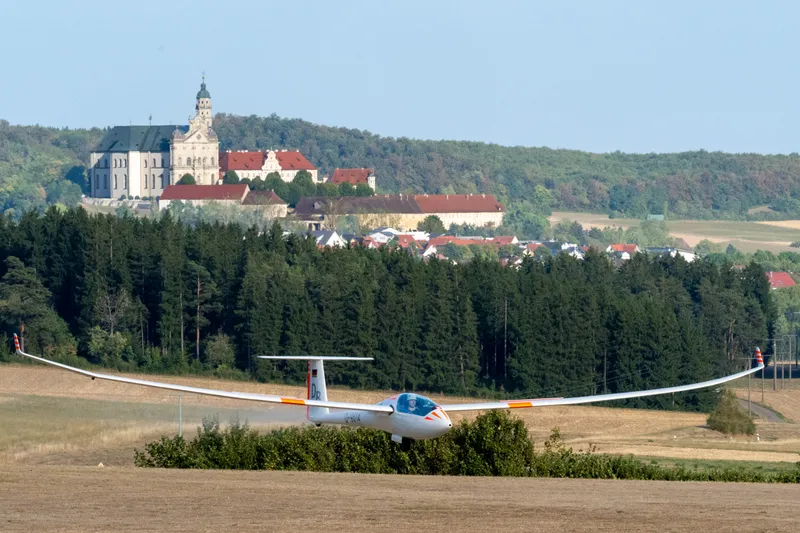
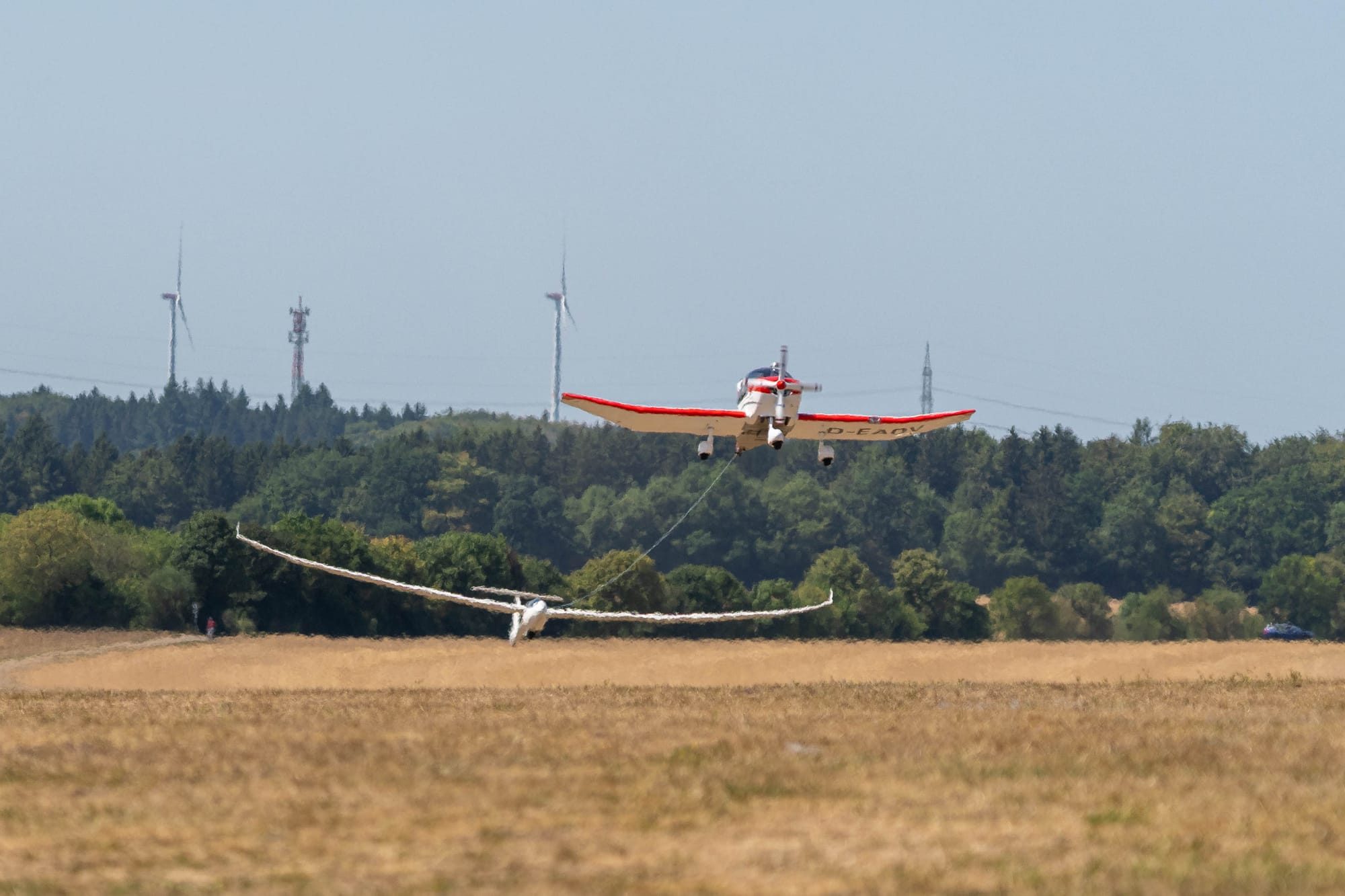
For the Club Class an Assigned Area Task (AAT) with three turn points was defined. The task led from the starting point at the Aalen airfield to Buchen, to Reichmannshausen, to the finish circle and back to the airfield. The task offered various options. Depending on the flight Five consecutive days of competition, five sessions of concentrated flying lasting several hours each, and tasks spanning several hundred kilometers: The 14th Junior World Gliding Championships in Elchingen have entered their decisive phase. What seemed like the start of a long week of competition on Monday has now become a daily routine for the young pilots: getting up early, preparing the aircraft, analyzing the weather and the task, taking off—and then flying for hours with intense concentration. On the fifth day of competition two challenging tasks once again awaited the participants in the Club and Standard classes. Club Class: More Than 400 Kilometers route chosen, the distance ranged from 290.5 to 425.1 kilometers with an average of 356.9 kilometers. Once again, this called for tactical flying. After all, gliding it is not just about moving forward as quickly as possible. Pilots must constantly weigh their options to determine how best to take advantage of the thermals and which route offers the best chance for a fast flight. A seemingly small detour can end up being faster than the direct route—provided that better thermals are waiting or will arise there.
Great Britain Ahead of Argentina and Australia
Sebastian Van Der Stichele from Great Britain took the day’s victory in the Club Class. Valentin Pastoriza from Argentina came in second, and third place went to Max Scutchings from Australia.
Standard Class: 361.2 kilometers across the region. The racing task for the Standard Class was even longer. The route first led from Aalen to Leibertingen, to Lake Kirnberg and on to the Rauhe Wanne. The route finally led back to Elchingen via Aalen. The task sheet listed a distance of 361.2 kilometers. For the pilots, this meant yet another several hours of constant decision-making. A glider relies entirely on the energy provided by the atmosphere. The art lies in finding rising air as efficiently as possible and converting it into altitude. Those who find a strong updraft can gain altitude and then convert that into speed. On the other hand, those who spot a thermal too late or stay in a weak updraft for too long lose valuable time. And it is precisely these seconds that add up over several hundred kilometers. Danish One-Two Finish,in the end, Lasse Edslev from Denmark came out on top in the Standard class. Flying his LS8, he secured the day’s victory. Jacob Bøgelund Lassen flew his Discus 2A to second place. Third place went to Elias Severholt Fourati from Sweden flying an LS8.
Overall results after five competition days
Overall Results in the Club Class:
1. Nicolas Caudrelier (France)
2. Gael Pischedda (France)
3. Max Scutchings (Australia)
Overall Results in the Standard Class:
1. Lasse Edslev (Denmark)
2. Jacob Bøgelund Lassen (Denmark)
3. Barna Hadi (Hungary)
This once again highlighted the international caliber of the athletes: junior pilots from numerous nations gather at Aalen-Elchingen to compete not only against each other but above all against the constantly changing atmospheric conditions. Five Days—and No Letup, five consecutive competition days at a World Championship are not just an athletic challenge. They also take a significant physical and mental toll on the pilots. After each flight they need to process the day’s experiences. What worked? Where was time lost? Which tactical decision was the right one—and which perhaps was not? The next morning, everything starts over again. That’s precisely what makes the World Gliding Championships so special. No two competition days are ever the same. Weather, thermals, wind, and the task constantly change the conditions. A pilot who was at the very top of the leaderboard the day before may suddenly find himself fighting for every point the next day. The competition is getting tighter, with each passing day of competition, the rankings therefore become more important. At the end of a flight lasting several hours, the differences between pilots can be as little as a few seconds. For spectators on the ground, it is sometimes hard to imagine: While seemingly silent gliders circle overhead, a highly complex competition is unfolding in the cockpits. Every pilot has his own strategy. Everyone is looking for the optimal route. Everyone knows that one wrong decision can cost many minutes. And above all else is the most important prerequisite: the thermals have to cooperate. After five days of competition, the Junior World Championship has therefore finally reached the stage where experience, flying and tactical skills as well as mental strength will make the difference. The young pilots from around the world have already impressively demonstrated their abilities in Aalen-Elchingen.
But the World Championships is not decided yet.
 Michael Kost