Jonker Sailplanes | Status and Outlook

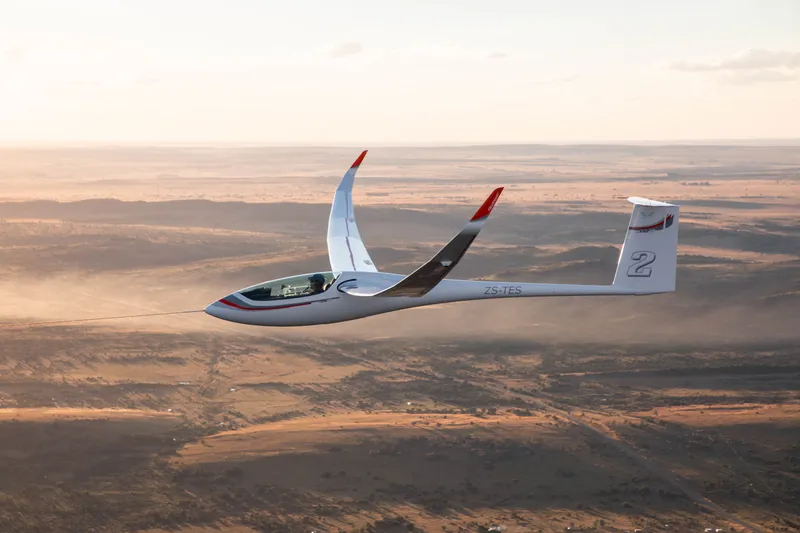
To get the latest updates straight from the source, we recently sat down with Uys Jonker for an in-depth conversation. From completing flight tests under difficult conditions in Europe to expanding production and advancing the highly anticipated JS4, Uys shared exclusive insights into the challenges and triumphs driving Jonker Sailplanes forward this year.
We spotted you in Germany recently. Are you a fan of the German winter, or was the trip all about your new collaboration with DG?
Uys Jonker: While I prefer the South African summer, this visit was strictly about business and collaboration. The most crucial task was conducting flight testing under immense time pressure. We needed to complete the final test points related to the open EAD on the JS3 RES and conduct additional flights on the JS2. Because both aircraft were stationed in Europe, it made logical and certification sense to test in Germany. We utilized tight weather windows efficiently, finalized the installation of the new balanced SOLO 2625-02i NEO Silent engine with Solo, and launched its production line.
Why was the JS3 RES tested again?
Following the technical modifications for the Emergency Airworthiness Directive (EAD), EASA used the opportunity to rigorously review our entire flight test program. The authority deemed our original selection of "critical combinations"—specifically regarding weight and balance and center-of-gravity (CG) extremes—as optimistic. They mandated a broader envelope coverage, specifically requiring validation flights for the 15-meter wingspan configuration and asymmetric mass scenarios involving single-battery operations. These were combined with tests to prove the modified water-cooling system met performance standards, resulting in an intensive flight campaign.
A separate article will follow that explains the Emergency Airworthiness Directive (EAD) on the JS3 RES in full detail — including the background, technical reasoning, and resolution process.
What was tested on the JS2?
The recent EASA audits clarified the authority's interpretation of "critical combinations" for mass and balance cases. Based on this, we proactively reviewed the JS2 flight test program. Where we identified potential gaps under this new modern certification logic, we voluntarily withdrew data and repeated the tests to prevent future bureaucratic delays. The tests were completed at DG in Bruchsal over three weeks. Conditions were extremely challenging, with wet, soft grass runways that caused the aircraft to sink, yet the original certified SOLO engine demonstrated highly impressive climb performance.
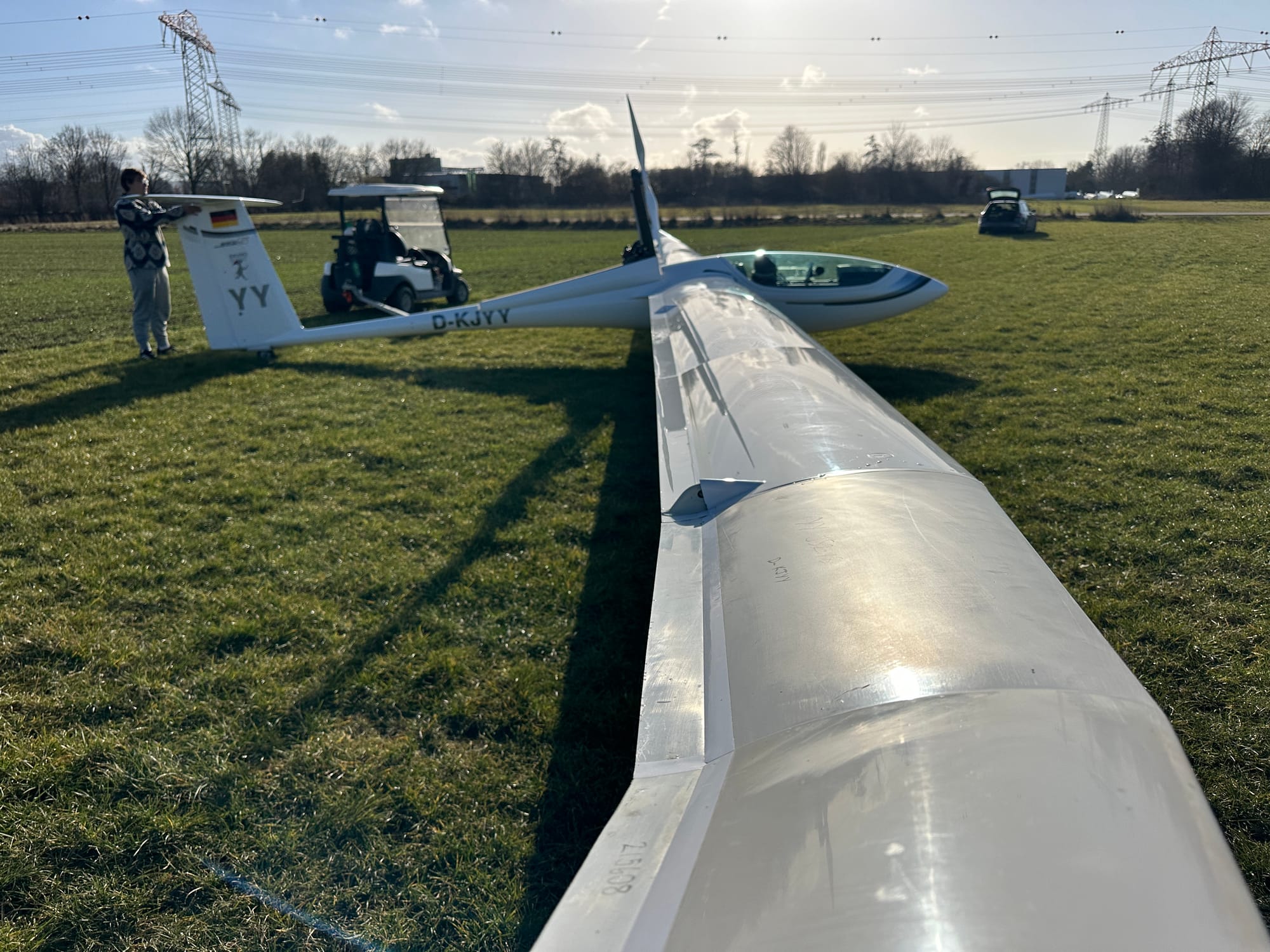
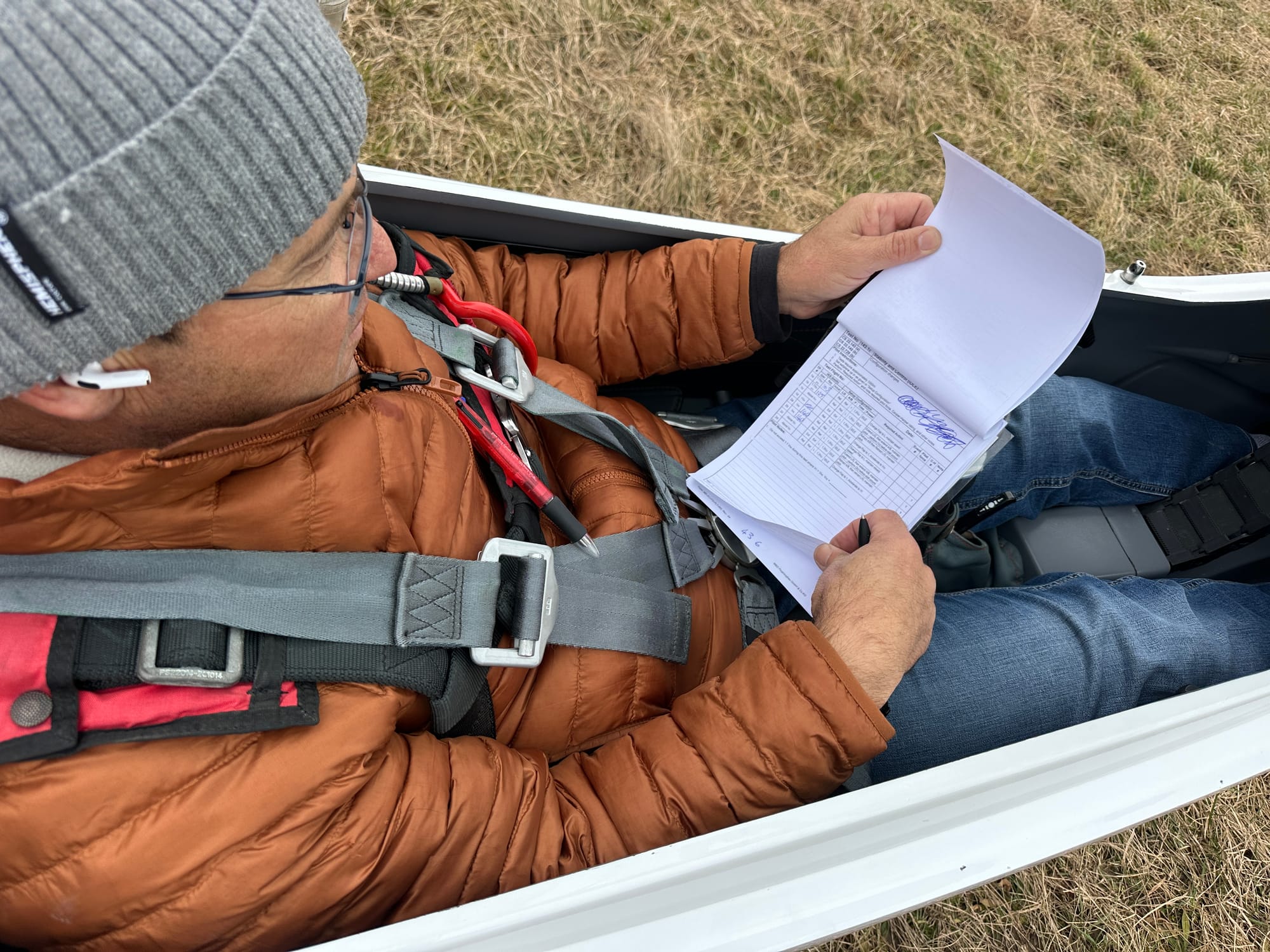
JS2 test flights in Bruchsal
How is the production running for the balanced SOLO 2625-02i NEO Silent?
Developing this engine installation took three years. Initially, standard engine mounting philosophies failed due to the severe vibration levels of this compact twin-cylinder engine. We chose to address the vibration at its source by collaborating with On-Track Technologies and SOLO to integrate internal balancing modifications. While early prototypes were promising, tightening serial production tolerances revealed fatigue in a balancing shaft transfer gear, forcing a two-year refinement process. The final design was completed mid-last year, and endurance testing is finished. The production line is now running at full capacity, delivering four engines per week to clear our backlog. It is truly a next-generation engine system.
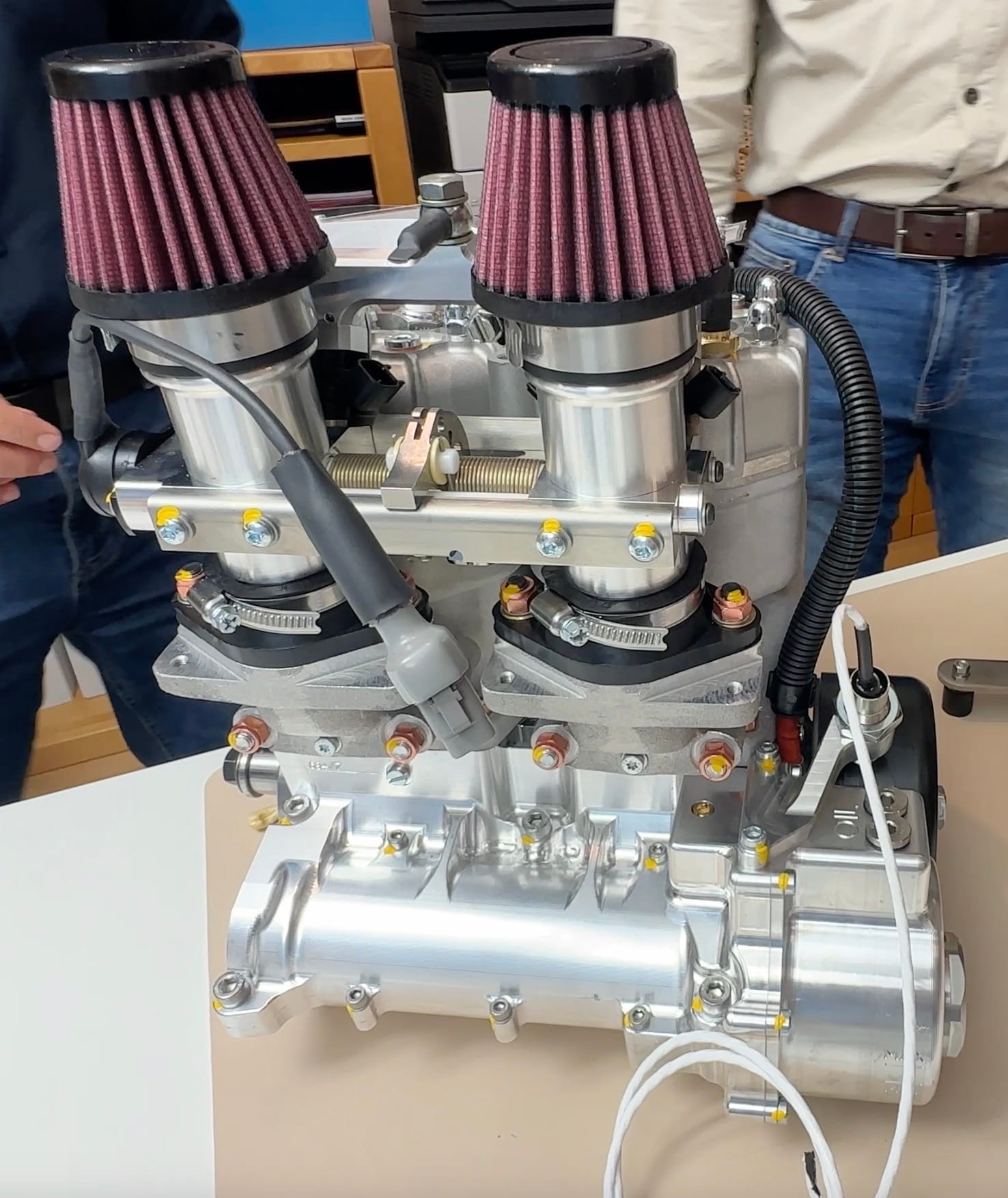

The balanced engine is a co-production
Are the first final engines installed?
Yes, the first final production engines have been installed at M&D in Europe and at our facilities in South Africa. The pressure is now on us to maintain an installation rate of four engines per week to satisfy the aircraft awaiting integration. After years of persistence, engineering has successfully transitioned into serial production.
Are JS employees supporting in Europe?
Yes, our South African engineers and technicians are on-site at M&D and DG. They are supporting the installation of the new SOLO engines, resolving the JS3 RES EAD, and providing technical assistance for high-season preparation. Sending our own engineers ensures capacity and quality control, while also facilitating natural knowledge transfer between the European and South African teams, strengthening our partnerships.

What exactly characterizes the corporate structure of JSDG Production GmbH? Where do the advantages of consolidation lie?
JSDG Production GmbH is a jointly established LBA-approved Production Organisation (PO) by DG Aviation GmbH and Jonker Sailplanes GmbH. It ensures the sustainable production of DG aircraft after the former DG PO was sold. The setup combines the labor-intensive manufacturing of DG-1000 fuselages in South Africa with final assembly and certification at DG in Germany. This solves the shortage of affordable skilled workers in Europe while sharing the immense certification costs of an EASA PO. For JS, it provides a strategic European-certified environment for future proprietary aircraft programs.
The JS5 was first presented to the public at the World Gliding Championships in Uvalde, Texas 2024. Looking back, how satisfied are you with its performance so far? Have you made any adjustments since then? And will the JS5 participate in the next World Championships?
At Uvalde, the JS5 prototype flew with a last-minute jet engine installation because the SOLO engine was delayed. The entire project was under immense time pressure to have the gliders ready in time for the competition. As a result, the configuration was not optimally tuned for peak competitive performance. The JS5 was flying in Uvalde with an MTOW of 770 kg, which we now know is not sufficient to fully unlock this aircraft’s Open Class potential. For true high-speed cruise dominance in the Open Class, a wing loading of approximately 60 kg/m² is required. Despite these limitations and the compressed preparation timeline, pilots were amazed by the glider’s outstanding low-speed performance, controllability, and overall balance. Following detailed analysis and pilot feedback, we have increased the Maximum Take-Off Weight (MTOW) to 800 kg to reach the optimal wing loading range. This adjustment significantly enhances high-speed performance and ensures the JS5 can fully compete at the top level of the Open Class. Participation in the next World Championships depends entirely on the finalization of EASA certification.

You mentioned that in 2024 you produced more gliders than any other manufacturer. How many sailplanes left the factory?
While unaudited, industry data suggests we produced the highest volume of sailplanes globally in 2024. However, quantity is not our primary goal; stability and quality are. Due to the delayed SOLO engine deliveries, we deliberately slowed new airframe production. We had 32 aircraft sitting in advanced stages waiting for engines, which congests final assembly. We paused to "clean up" the line and rebalance the flow. For 2025, we target completing 41 aircraft, and about 42 gliders in 2026, focusing on predictable delivery.
Production will soon move into a new facility. Can you tell us more about that?
Following a Luftfahrt-Bundesamt (LBA) audit, we determined our current military base facility is inadequate for our volume. We are moving to a new 10,000 m² factory complex nearby, specifically designed for modern composite sailplane production with state-of-the-art spray booths and assembly lines. Approximately 140 factory employees will move there by April. Simultaneously, On-Track Technologies, our development partner with 18 engineers and 22 technicians, will relocate into our old 6,000 m² factory. Managing this move alongside the EAD and certification programs has been intense, but it is a major step forward for our future capacity.
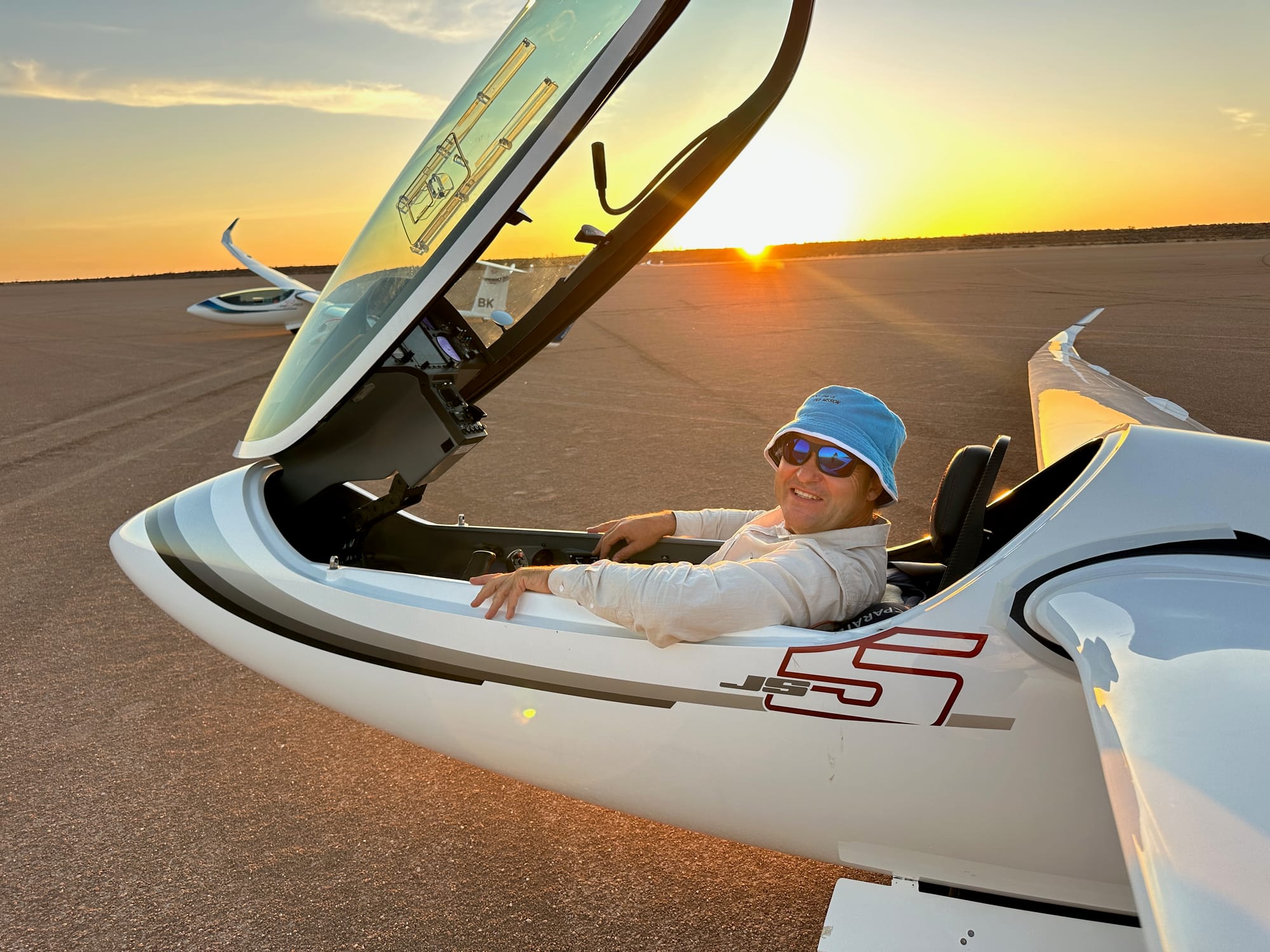
What are the future projects at JS - or is it too early to talk about them?
Our next major focus is the officially announced Standard Class JS4 Rengeti. With the JS2 and JS5 development largely finished, our engineering team is shifting to the JS4. Wing molds are currently being manufactured, and the development phase will be complete by the end of this year, with a first flight planned for December 2026. The JS4 will be a compact, highly competitive, and affordable glider, specifically designed to attract younger pilots entering competitive soaring.
What About a Double-Seater? Is JS considering entering the double-seater market as well?
In the long term, JS intends to produce sailplanes across all relevant classes. A double-seater is definitely part of that vision. At present, however, only limited engineering manpower is allocated to this project. Our engineers are already working on the aerodynamic design of a future JS double-seater, but development is progressing in a structured and measured way. Entering the double-seater segment requires substantial engineering resources to create a product that is truly competitive in a market that already features several excellent and highly developed aircraft. Currently, our strict and primary focus is on the successful completion and launch of the JS4. The majority of our resources are dedicated to ensuring that this project is executed to the highest standard. We operate on the principle of taking one step at a time - the JS4 comes first, and the double-seater will follow.
Thank you very much for the insights Uys!
Read all about the Emergency Airworthiness Directive (EAD) on the JS3 RES in our next article — including the background, technical reasoning, and resolution process.
WeGlide. Innovations for the sport. Help us advance gliding:
If you would like to receive articles like this directly via email, you can sign up in your profile.