JS Challenge Winners Are Taking Off
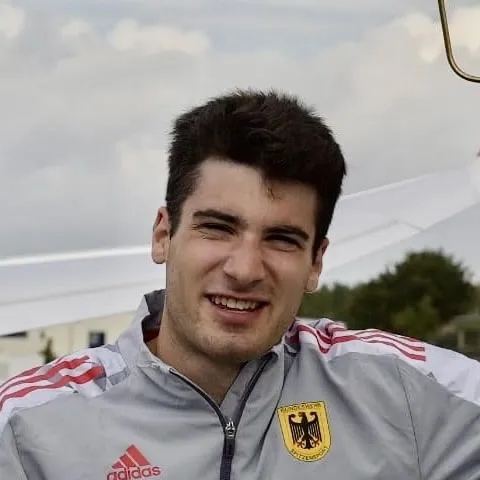
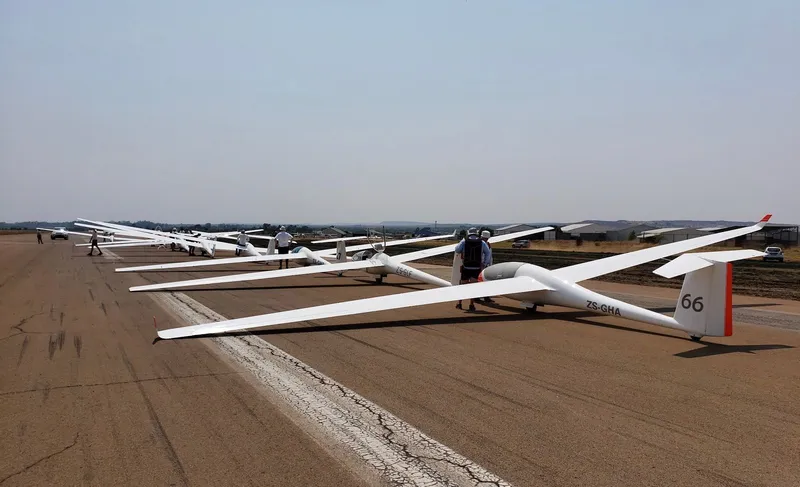
Congratulations for winning the JS Challenge! In a few days you’ll be travelling south to fly the South African Nationals. This unique experience is made possible by Jonker Sailplanes.
We want to get to know you a bit better so can you tell us a little about your flying career so far?
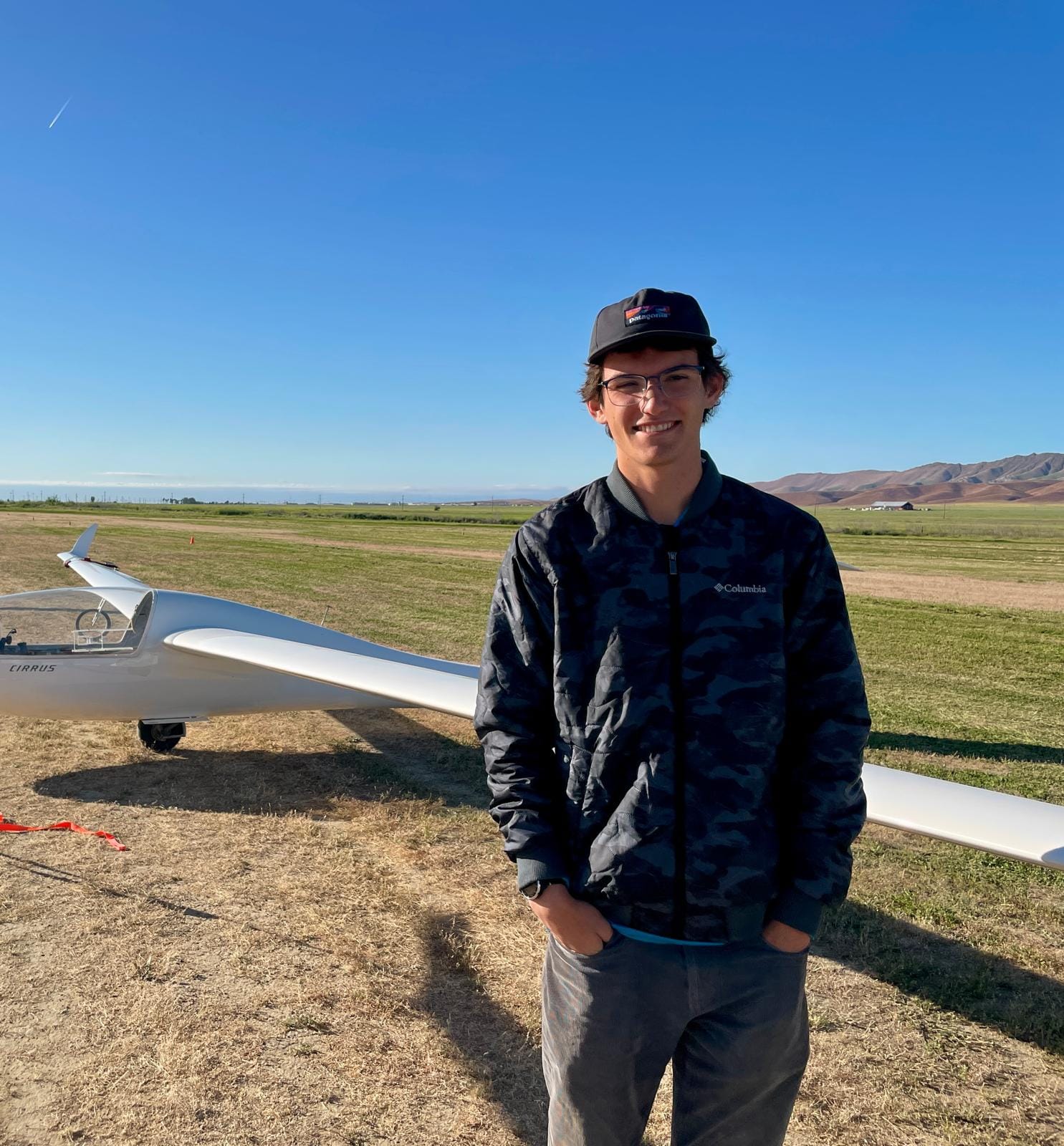
Alessandro: My first glider flight was in 2012 when I was 8 years old at Sky Sailing in Warner Springs, California. I eventually started training at 15 to solo and earn my private pilot license. Afterwards I started university and got busy with my studies, but I was lucky enough to meet a very experienced cross-country and competition pilot who pushed me to fly in a contest for the first time. I was able to fly a glider that was generously loaned to me for this contest. I have been flying cross country and racing consistently for the past 2 years and now have over 400 hours. I fly a Discus 2 primarily in Southern California and at some contest sites around the Southwestern United States.
Jasper: Hi! I’m Jasper, a 24 year old Aerospace engineering student from Delft, the Netherlands. Inspired and motivated by my father, who flew gliders himself in his student age, I started flying in 2017 at the age of 15 at the Kennemer Gliding Club (KZC). The location of my club is rather unique, just 2 kilometres from the North Sea amid sand dunes and Dutch tulip fields. Truly special about the KZC is our ability to ridge soar the dunes along the coastline. After, we ‘outland’ on the beach as we can’t reach the required altitude to go back to the airfield.
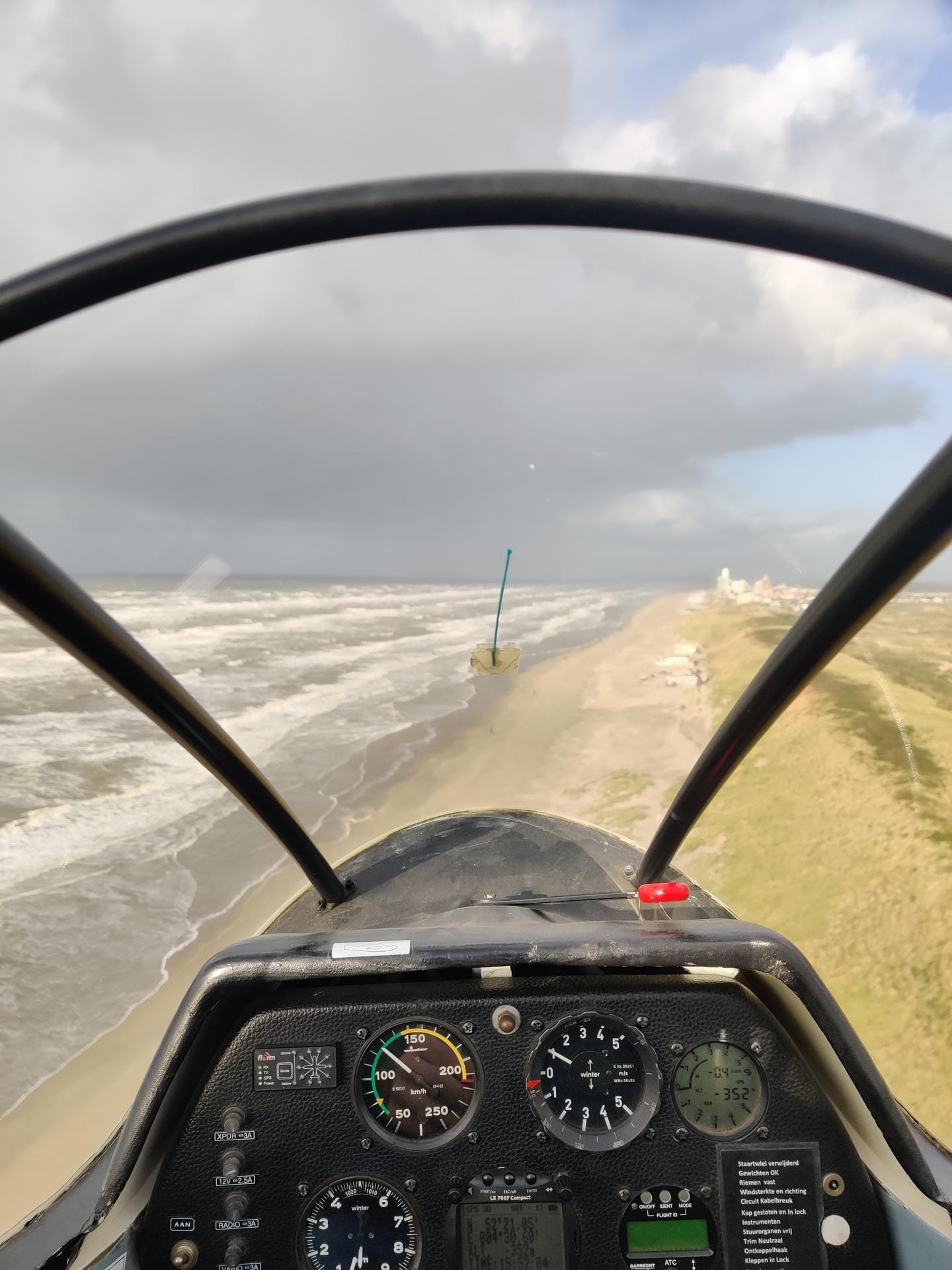
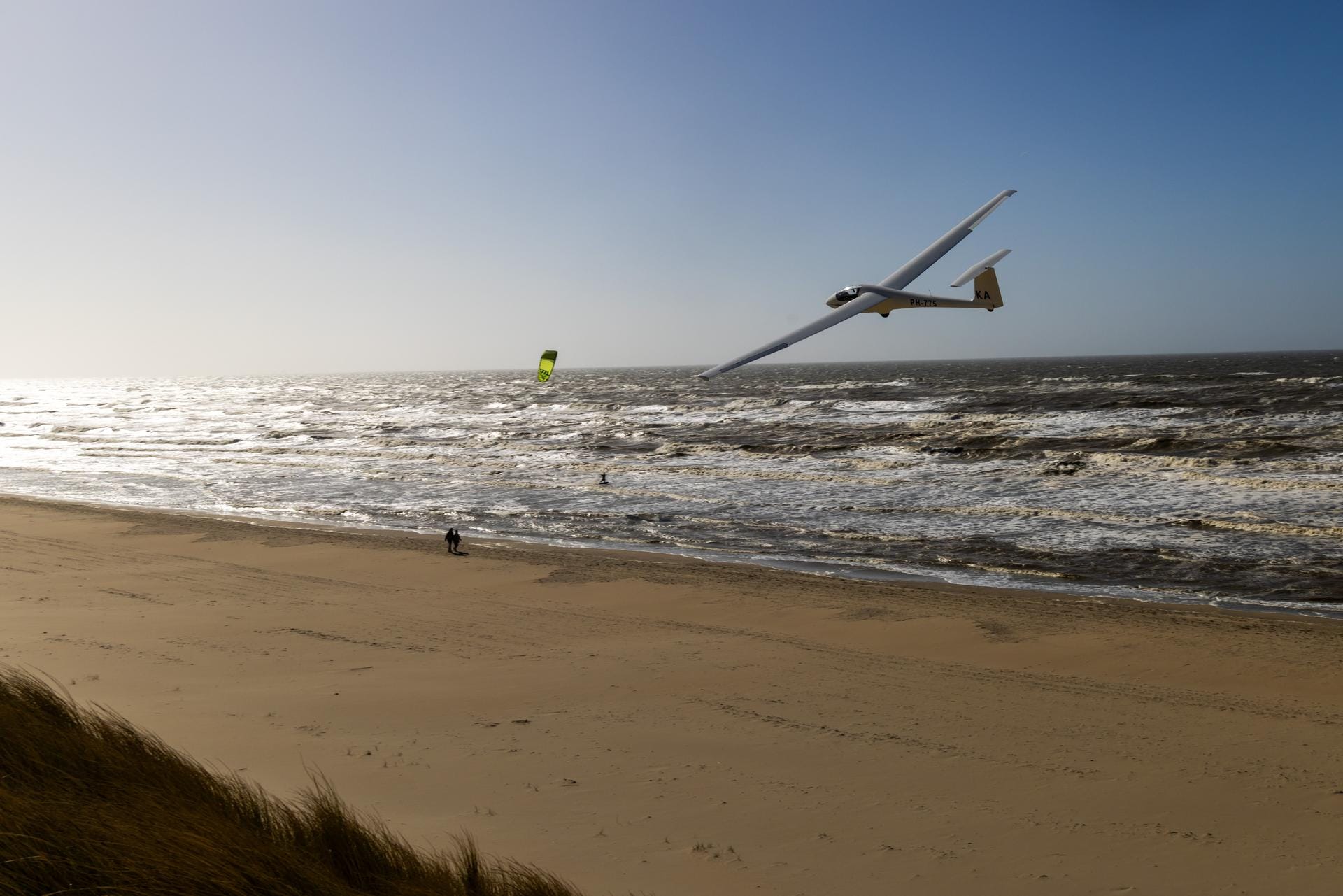
Soaring the dunes @Jasper Jansen
However, by being so close to the sea thermals are uncommon and weak. Next to that we sit right under Schiphol TMA capping our freedom at 1500ft, closest higher airspace is some 50km away. Therefore we cannot do any cross country flying from my home airfield. This didn’t hold me back however, after getting my license I flew mostly out of Terlet and German airfields and progressed towards long distance cross country and competition flying. Since then I accumulated around 700 hours, flying mostly Ls4 and Ls8 representing the Dutch Junior Team at European and World championships. Nowadays I rarely fly at my home club anymore, but still frequently come by to enjoy a beer. For the seasons ahead my intend is to explore the 18m class, instructorship, and Alpine flying.
For the JS Challenge, Speed is all that matters. Do you remember the fastest Sprint of you this year?
A: My fastest sprint point flight of the 2026 season was also my personal best flight ever. I launched from Warner Springs and flew 920 km at 135 kph. My fastest legs of the flight were along the primary coastal-desert convergence line that stretches from the Mexican border almost to the Mojave Desert. The three legs in the sprint window from this flight had speeds between 140 and almost 180 kph with less than 10% thermaling.
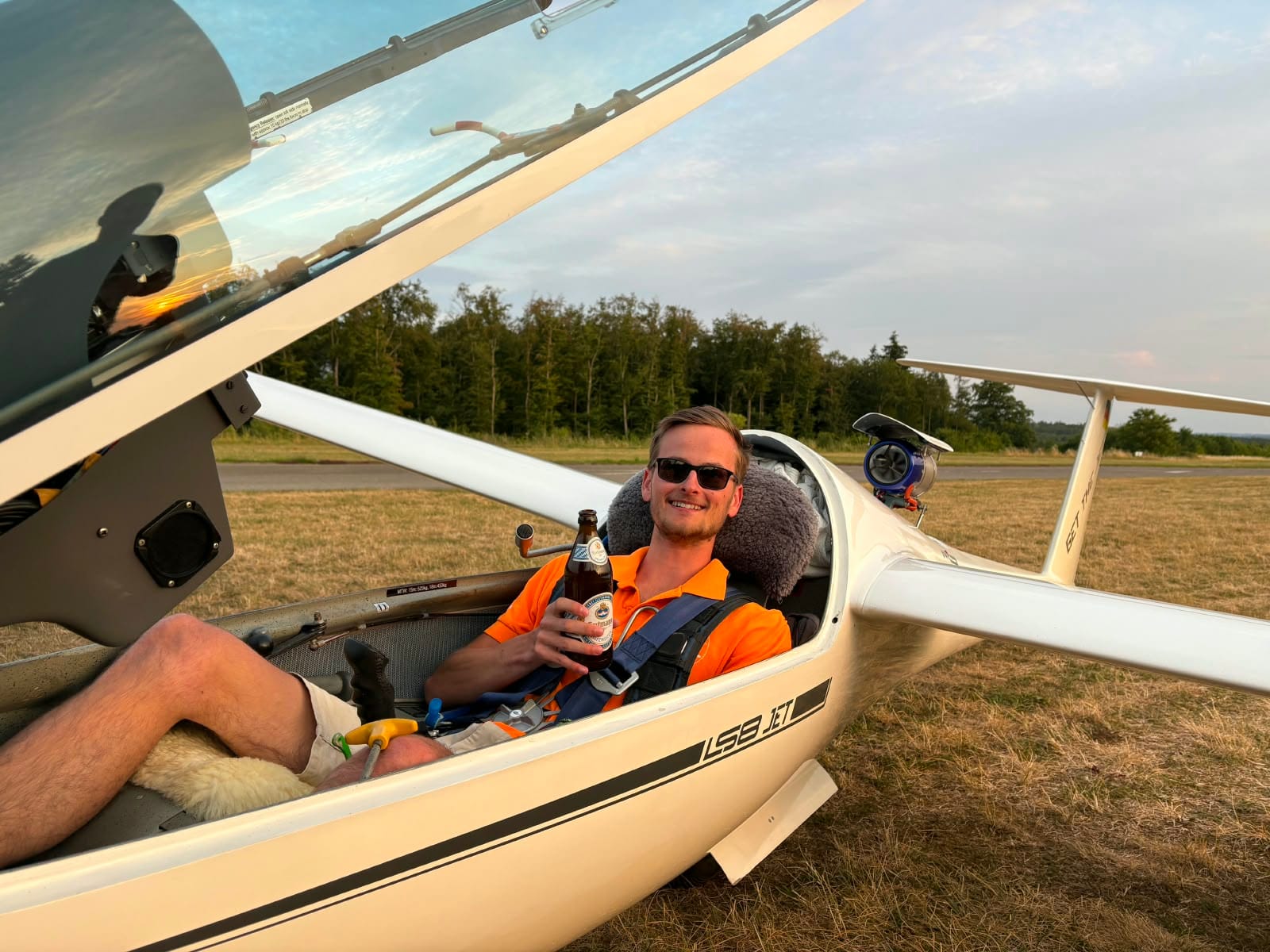
J: I did all my fast sprints in the Ls8 Jet, provided by M&D Flugzeugbau for the JWGC 2026 in Aalen. The days prior to the competition provided absolutely ridiculous weather, which fits a fully loaded Ls8 exceptionally well. My first training flight a long lasting convergence line formed over the Swabian Alb, spotted by my teammate on the satellite. I have very little experience with convergences, but fast it went. Incredible sights skimming through the whisps of cloud, climbing with 4+ m/s in a 335km long glide. A slight tailwind helped reaching 180kph average on the downwind stint bringing the 2hr speed to 148kph. Only 4 days later I went even faster with 150kph, flying the exact same route. This time however, it wasn’t convergence. Some nicely aligned clouds spiking the vario to 7 or 8 m/s, averaging between 5 and 6, one after the other. Conditions I thought only existed in Namibia or Condor 3.
What do you like about the 2 hour Sprint window? How do you optimize a speed flight?
A: I really like the sprint scoring system because it gives you multiple chances to do well in each flight. So even if you make a mistake and get stuck at some point during the flight, you can still recover and have a fast 2-hour sprint window. Convergence lines and cloud streeting are great ways I used to optimize cross country speeds for this challenge. Also, flying with water ballast helped maximize the glider’s performance.
J: I believe 2 hours is the perfect window to have a competitive sprint. Any shorter and too much luck comes into play, and longer will include the worser parts of the day. Having a maximum of 3 legs also requires the good weather to be over a larger area, flying at least 100km per leg for the speeds we did. Energy lines are essential to maximise speed, so in the flight planning its worth checking for convergence lines or set a route parallel to stronger winds taking maximum advantage of cloud streeting. Of course, racing downwind greatly boosts your average. Although finding a crew to fetch you some 400km’s away might be troublesome. For my fastest sprint I planned to fly upwind as far as it goes without circling, then race downwind and fill the 2hrs. I wished to fly 150kph, the plan worked out perfectly and so was my achieved speed spot on. One last factor to keep in mind is that the finish altitude must not be lower than the start altitude. So don’t start too high or have a fast and long first glide spanning a large vertical start sector so to say.
For Jasper: What makes gliding in the Netherlands special?
The Netherlands being famous for its flat landscape and farming industry makes it very easy and comfortable to fly cross country, you would have to mess up pretty bad to find yourself without any safe landing options. However, the airspace and weather is more challenging. With several busy airports in and bordering the country it requires some attention to navigate around. Luckily however, we can easily go east into Germany. Weather wise, there are better places in the world but long flights can still often be made, be it with lower cloud bases and weaker thermals than we find over the Swabian Alb. Strong days do exist however. With around 2500 active glider pilots hosting multiple competitions and events per year we have a rich community which also makes it very much worth coming to the airfield without the intention to fly that day.
For Alessandro: What makes gliding in California special?
I believe that the mix of strong soaring conditions and diverse landscape make gliding in California super special. Most of the gliding I have done in California has been along strong convergence lines over beautiful coastal mountain ranges in Central California and high desert in Southern California.
What are your expectations for South Africa? What gliders will you fly?
A: I am really looking forward to experiencing the gliding community in South Africa as well as meeting and learning from very experienced contest pilots. It will be interesting to see glider pilots coming from different parts of the world to fly the same contest. Also, I’m excited to see the landscape and fly a new glider. I am also hoping that we will have a chance to visit the Jonker Sailplane factory because I am very interested in seeing how those impressive gliders are made.
J: I am very much looking forward to the whole event and travelling to South Africa itself. As I said before, I am not used to the average African soaring conditions. High altitudes, strong thermals, short and fast days, and the abundance of storms makes flying a competition alone a unique experience. Together with the landscape, with its savanna and desert biomes is quite the opposite of green forest and grass fields, I can’t expect anything else than to make many memorable flights. Besides flying, I am also looking forward to great times on the ground, knowing some of the other competitors from the Junior World championships.
WeGlide. Innovations for the sport. Help us advance gliding:
If you would like to receive articles like this directly via email, you can sign up in your profile.
 Jens Kammerer